

Proteins are natural building blocks found in all living organisms. They serve both as structural material as well as messengers in the body. These proteins are in turn composed of individual amino acid building blocks. The blueprint according to which the body produces them is stored in the genetic code.
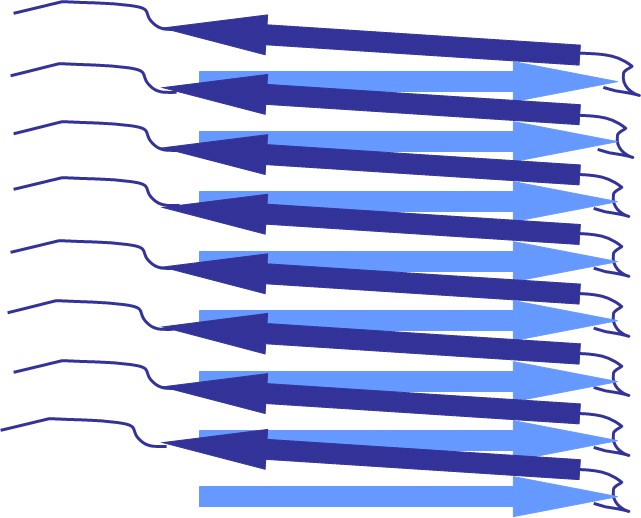
Proteins, some of which are composed of hundreds or thousands of amino acids, are intricately folded, three-dimensional shapes. Their structure determines their function. If folding is disrupted, the proteins lose not only their biological function but can also cause neurodegenerative diseases. Prions, aggregates of misfolded endogenous proteins, are responsible for the bovine disease BSE or Creutzfeld-Jakob Disease (CJD) in humans. These are able to transfer their mutant structure to other proteins and are thus infectious. Prions can destroy nerve tissue.
In yeast too, proteins are present which – as in the case of pathogens in animals and humans – can form infectious aggregates (prions). Yeast is therefore a good model system for investigating key mechanisms in human diseases. Together with colleagues from the RIKEN research institute in Japan, the research group led by Professor Henrike Heise from HHU’s Department of Physical Biology and the Institute for Complex Systems – Structural Biochemistry at Jülich Research Centre used magnetic resonance spectroscopy to study the structures of various strains of prions formed by the N-terminal fragment Sup35NM of the yeast prion Sup35p. The researchers especially wanted to study the influence of environmental conditions or genetic factors on the prions’ structure and thus on their specific properties, such as infectivity.
After earlier investigations had shown that thermodynamic factors, such as ambient temperature, can lead to various prion strains with different structures and properties, in their current study the researchers examined a point mutation in which a single amino acid in the centre of the misfolded area – the amyloid core region – is substituted by another. The result of this exchange of single amino acids is that the mutated protein can indeed also form prions. However, these differ greatly from the prions of the original “wild-type” protein. Independent experiments by means of protein digestion – protein degradation enzymes “digest” in this process all the regions not belonging to the amyloid core region so that only the core region remains – as well as using solid state magnetic resonance spectroscopy showed that the amyloid core region of the prions formed from the mutated Sup35NM protein is found in a region that is not part of the amyloid core region in the wild-type prion. The researchers also discovered that this protein mutant is already far less compact in the unfolded state, which ultimately has an impact on protein aggregation.
These are important findings for understanding the formation of defective and pathogenic protein structures. They can also form the basis for developing new therapeutic approaches. Apart from Creutzfeld-Jakob Disease, this is also relevant for other neurological diseases such as Alzheimer’s and Parkinson’s diseases, since these are also caused by misassembled proteins that clump together and can damage nerve cells as a result.
Original publication
Yumiko Ohhashi, Yoshiki Yamaguchi, Hiroshi Kurahashi, Yuji Kamatari, Shinju Sugiyama, Boran Uluca, Timo Piechatzek, Yusuke Komi, Toshinobu Shida, Henrik Müller, Shinya Hanashima, Henrike Heise, Kazuo Kuwata, Motomasa Tanaka, Molecular basis for diversification of yeast prion strain conformation, PNAS, 21 February 2018
DOI: 10.1073/pnas.1715483115
Online: http://www.pnas.org/content/early/2018/02/20/1715483115